


Nostalgia & Experience
Members of our team have been in the markets for more than 45 years.
We’ve seen bull markets and bear markets in just about every investable instrument and economy:
Asian bubbles and panics
Latin American bubbles and panics
Base metal booms and busts
Stock and bond blowoff tops and panic lows
Gold and silver spikes and troughs
Developed economy booms and slumps
Property bubbles and busts
One thing that stands out in all of these is the nature of investor psychology. There are discernible patterns of investor behaviour that recur cycle after cycle.
Pattern Recognition
Let’s run through our experience of a typical market cycle:
At the bottom of a market bears are everywhere and bulls are few and far between. Every market rally is seen as a selling opportunity and the bulls - who have been slaughtered time after time for months if not years - are regarded with derision.
For some reason prices start to rise and a small cadre of bulls plucks up the courage to call out their convictions. The bears pile on the derision and scepticism.
Prices defy the bears and continue to move upwards. More bulls begin to shout and a few bears become more timid but are still openly sceptical.
There are pullbacks in the uptrend, and the bears resume their cries of “bear market rally” while the bulls become a little less strident but still confident.
More price increases appear and now some of the bears begin to jump ship and the balance of market prognosis starts to tilt in favour of the bulls.
New price highs are made and now the bears retreat into the woods while the bulls strut their stuff more loudly and confidently.
Prices accelerate.
Finally the bears capitulate and only a few of them remain - “We are all bulls now”, to paraphrase Richard Nixon.
The media is now full of tales of people getting rich riding the bull market and explaining the obvious logic behind the steepening trend of prices. An increasing number of investors pile in from other, less attractive asset classes.
Dinner gatherings are full of tales of guests making a killing in the market and asking how much of the particular asset the other guests have.
This is almost always a top.
Then there is some “exogenous” or inexplicable event which drives a sharp probe lower in prices. The bulls call “pullback” and “buying opportunity” while the bears - humiliated and perhaps even poorer after long periods of bull-market denial - are nowhere to be seen.
Market newsletters and other service providers that have gained massive numbers of customers during the bull market don’t want the music to stop and deny the very possibility of a bear market. All the “fundamentals”, after all, remain bullish.
Prices continue to probe lower and the “buy the dips” calls become more shrill.
Each rally is hailed as the resumption of the bull market and justification of the claims of the bulls during the most recent “correction”.
Further price declines lead some bulls to retreat a little and withdraw their commentaries and indeed their buying, but most of the pundits and spruikers from the bull run are still there reaffirming the bull market hypothesis with various thematic arguments and accusations about market manipulation and short selling.
New lows are hit and more of the bulls and newsletters become less assertive. Bears begin to claim the public high ground and pronounce the end of the bull market, sometimes justifying their case with new ideas that were not discussed during the major cycle upleg.
More new lows occur and more bulls go quiet while the bears commence the “we told you so” chorus. More investors swing to the bear case.
Eventually the bulls retreat and become a tiny minority as prices either continue to fall or languish for some time. Everyone is bearish.
The media is now full of tales of people and institutions who have lost their shirts in the bear market.
Governments are sometimes called upon to “do something” to save the market - indeed sometimes “the economy” - from malevolent actors.
The investing public resolves that the market is now moribund and it’s time to move on to something else.
This is the bottom.
Wash, rinse, repeat.
This schema is not set in stone. It’s not a straightjacket. It’s not something that has to happen with every market every time.
But it is a pattern that we have observed time and time again over nearly a half a century of market behaviour.
It’s description underlines the importance in human society of pattern recognition.
We survive only because of pattern recognition:
We quickly learn to recognise what a predator looks like and what a prey looks like.
Our immune system learns to recognise “self” and “non-self”.
We learn to recognise a genuine smile from someone we can trust from a fake one from someone we cannot.
We learn to recognise food that tastes safe and food that doesn’t.
We learn to recognise suspicious behaviour and innocent behaviour.
These behavioural dynamics in markets can be, to a greater or lesser extent, quantified. There are bullish consensus data, for example, and there are measures of price acceleration and deceleration that often accompany major tops and bottoms. There are chart patterns that often appear at significant highs and lows. Nowadays there are search engine data that can quantify how often people search a particular market or theme.
Gold
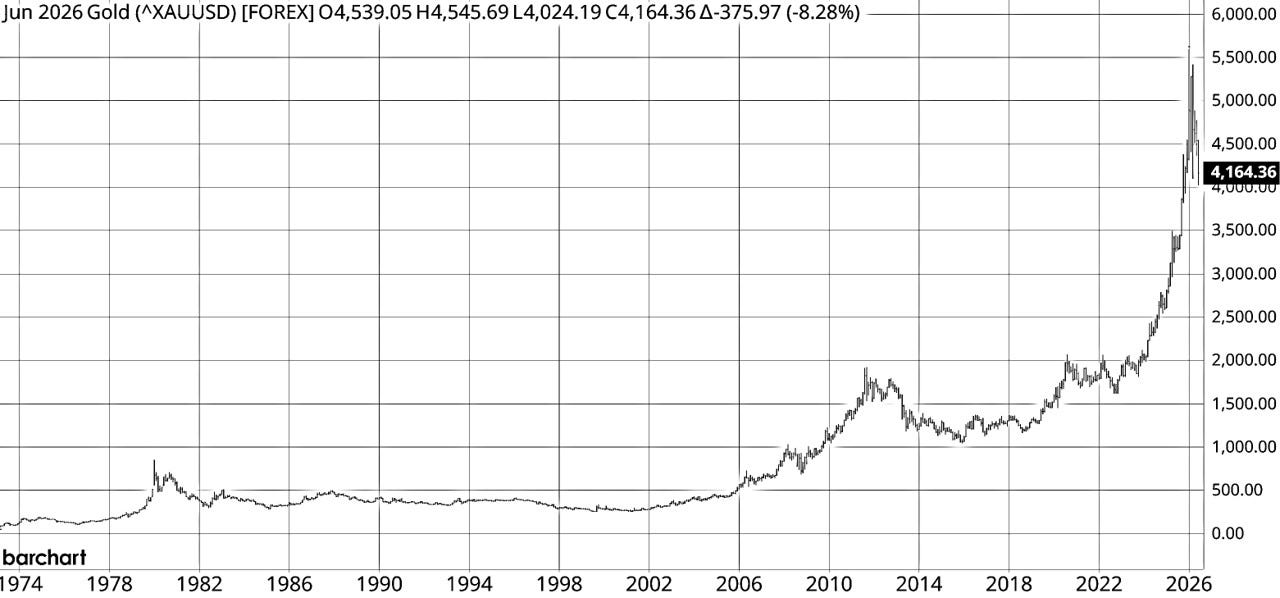
Now take the 24-point schema above and apply it to the gold market.
Do you think it has ever applied to gold? Do you think it might apply now? If so, where do you think we are in the overall scheme of things?
NO ONE KNOWS THE FUTURE.
Anyone who pretends otherwise is likely a charlatan.
All we can do is apply the tools that we have, based on logic and what we have learned from history, to the current price dynamics in the gold market.
We have tried to incorporate three things in our approach to gold prices:
Our deep experience over a long period in observing market behaviour.
Our ability to combine the logical and historical relationship between the primary long and medium term drivers of gold prices - the rate of debasement of the currency - with measures of investor psychology.
Our longer term view that the price of gold will trend higher because of this overarching trend of money printing.
If you haven’t yet read our other Gold posts you might like to visit them.

GOLD MODEL SIGNAL FOR JUNE

As subscribers are aware our gold timing model EXITED long positions at the end of January of this year.