Equities v. Bonds - Model Positioning for June
Just follow the man with the money printer...


Stepping Above the Noise
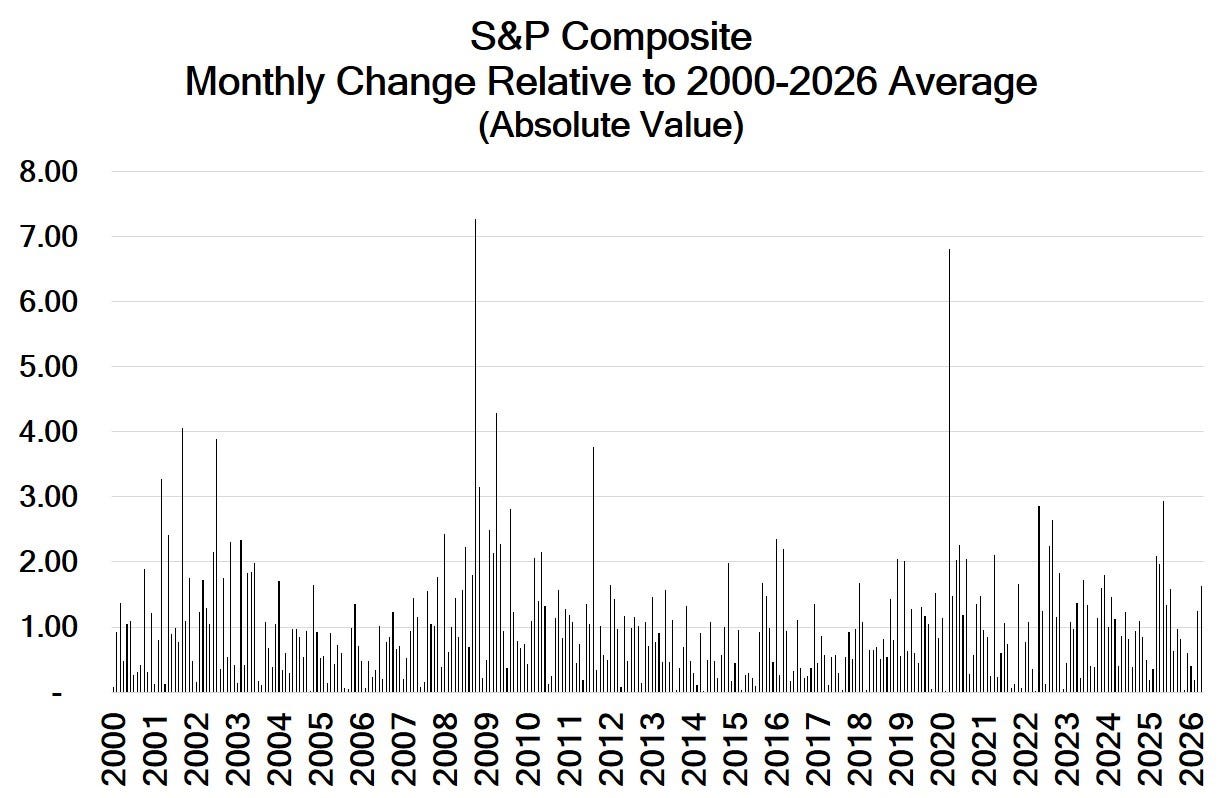
After March’s sharp sell-off in global equities April saw a rebound in most markets. These are volatile times with major swings related to the Iran war and AI/Tech sentiment.
The last couple of months have seen percentage changes (in absolute value terms) about 50% above the average for the 2000-2026 period.
We try as much as possible to step above the noise and identify future trends, using those trends to position portfolios.
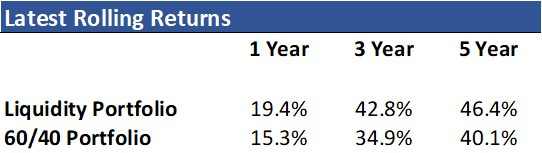
Below we assess how our liquidity strategies are dealing with this volatility and, more importantly, how they are positioned for June.
Our macro approach is not intended to fine tune positions on a short term basis but rather to position portfolios over the course of the longer term liquidity cycle and its impact on markets. Each month we run our models to address several asset allocation questions including the relative weights of stocks versus bonds.
As with our previous Monthly Stocks/Bonds Timer posts, subscribers are encouraged to revisit our Framework post which outlines the methodology we apply in using the Liquidity cycle - the cycle of money supply growth minus money demand growth - for timing the changes in relative weights between stocks and bonds in a mixed portfolio.
In this framework relative stock and bond weightings are determined by the economy’s stage in the Liquidity cycle as displayed schematically below.
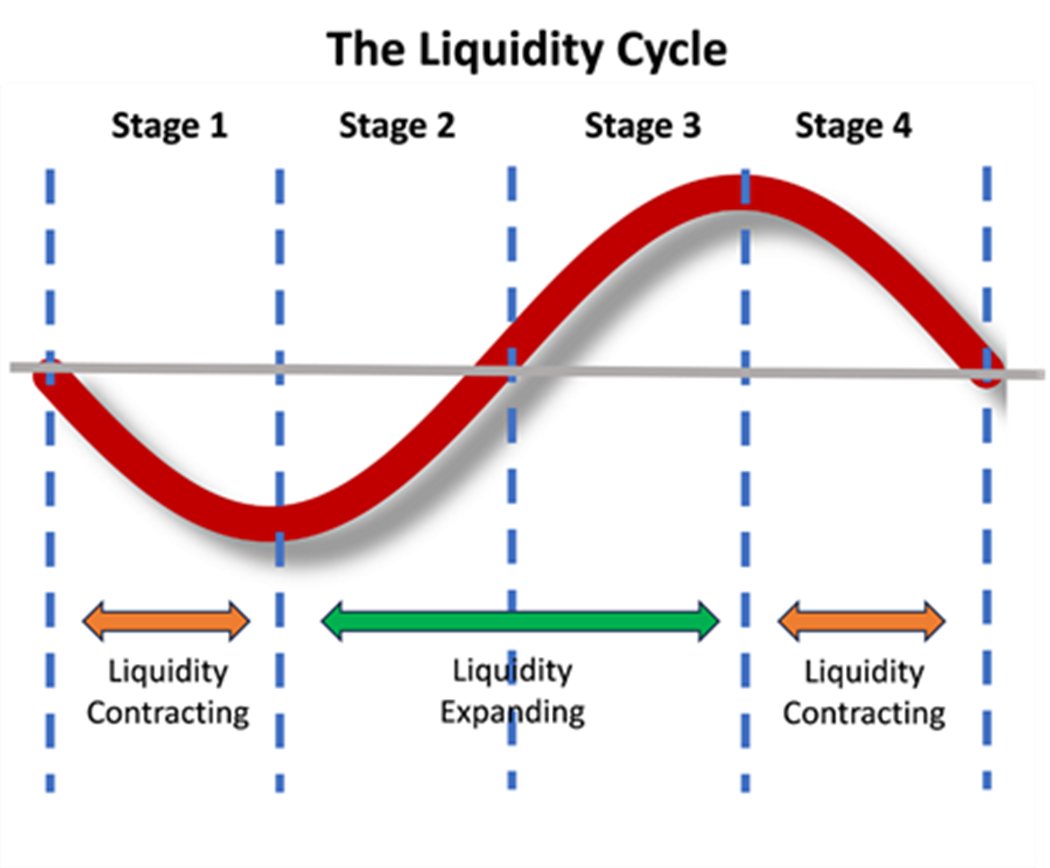
The relative weightings table below reflects the risk tolerance in each of the stages above. The weightings are relative to a standard 60/40 stock bond portfolio.

Below, we update our model stock/bond weightings for:
US
Eurozone
Japan
UK
Australia
Canada
We discuss the application of the approach to the listed countries together with forthcoming positioning, beginning with the US.
Global Portfolio
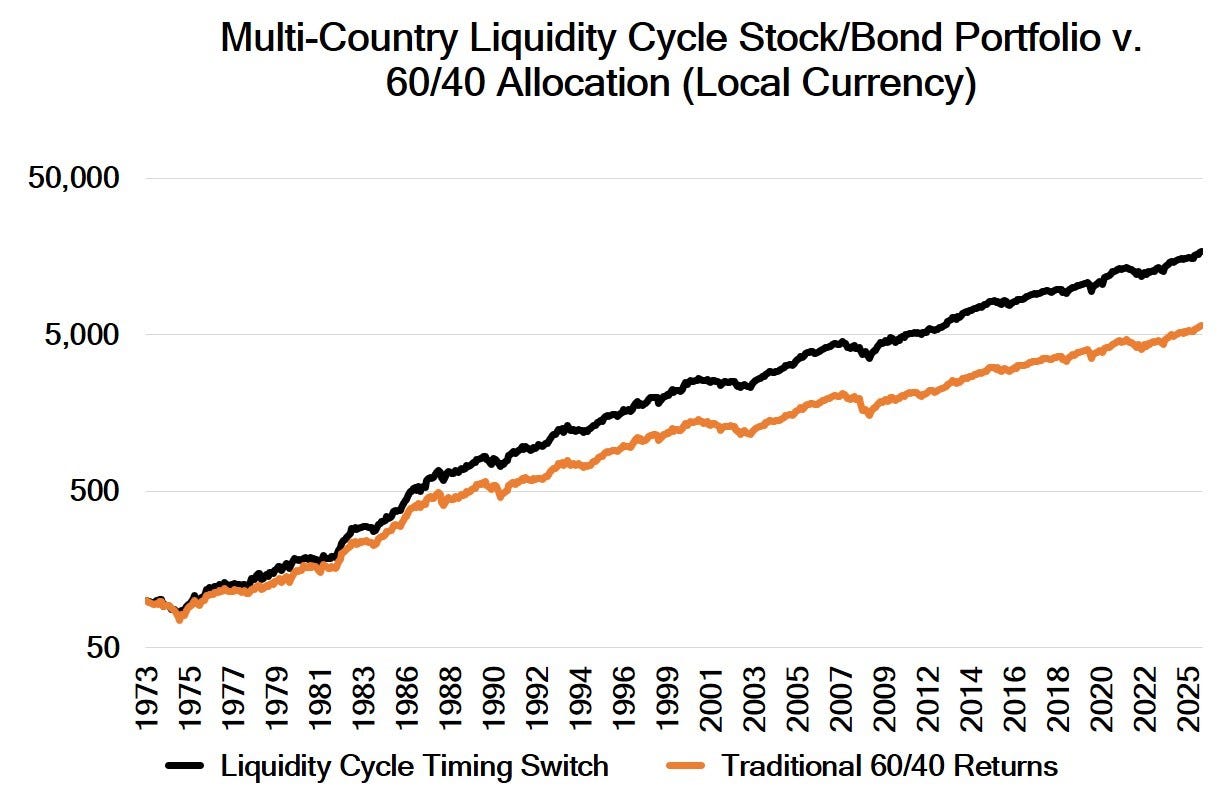
Our notional global stocks/bonds portfolio - equally weighted in each of the above markets - is compared to an equally-weighted 60/40 benchmark (in local currency terms) as follows: