


Context
The Iran war (and to a lesser extent the Ukraine war) is seeing a renewed focus on commodity prices. The blockage of the Strait of Hormuz, the destruction of petrochemical infrastructure in the Persian Gulf region and curtailments of grain shipments from Ukraine have all focussed attention on the influence of commodities not only in the production of key goods but also on official inflation statistics which, in turn, affect central bank policy settings.
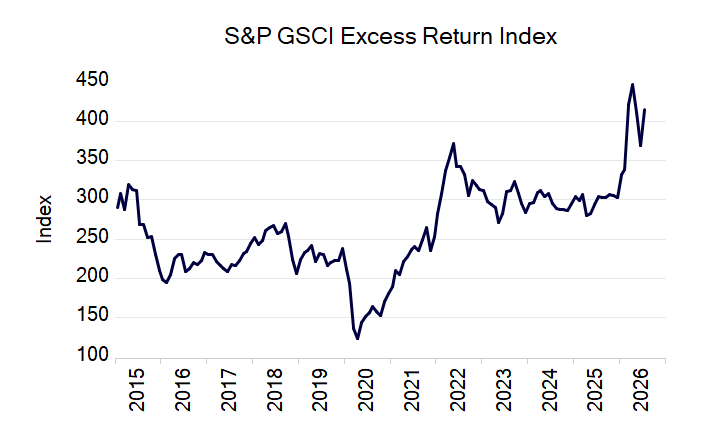
The S&P GSCI Excess Return Index for commodities is sitting in a clear uptrend and within 10% of the highs of the last decade.
Outside of sectors such as Basic Materials, how can these movements in commodity prices be captured in a diversified multi-asset portfolio?
Individual Commodities Over the Economic Cycle
We have shown on numerous occasions that the prices of various assets and markets move with the economic cycle, which in turn is driven by the cycle of inflation and deflation of the money supply.
The same approach can be used when addressing commodity prices. Below we show the S&P/GSCI commodity index and its relationship to the global cycle.
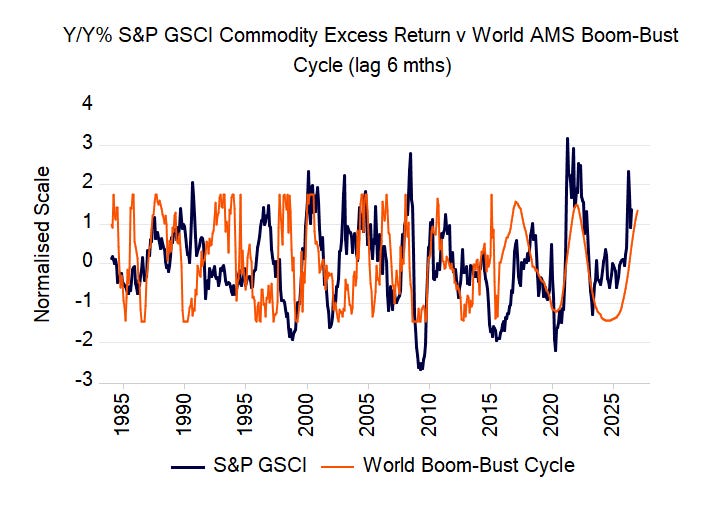
What we see is that the current cycle is still rising, supporting the price momentum of the commodity complex.
This, however, is for the complex as a whole.
What of individual components within the complex? Can we construct portfolios of commodities just as we construct portfolios of other assets using the same approach that we apply to stock market sectors, for example?
For the commodities markets we use our leading global boom-bust cycle proxy (driven by global monetary movements) in order to determine preferred allocations to specific commodity groups within an overall commodities portfolio.
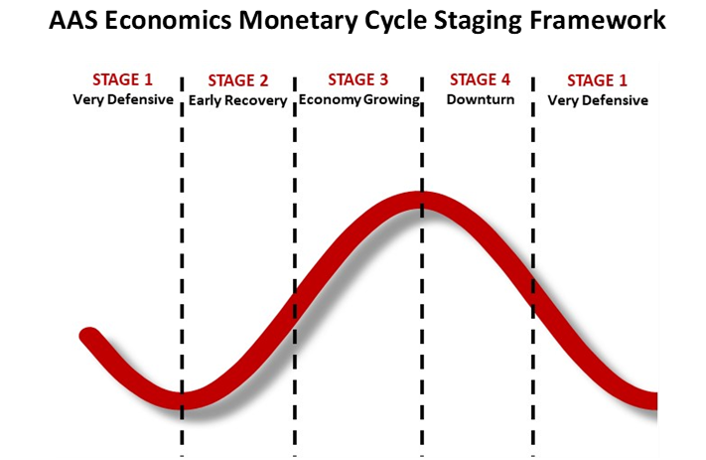
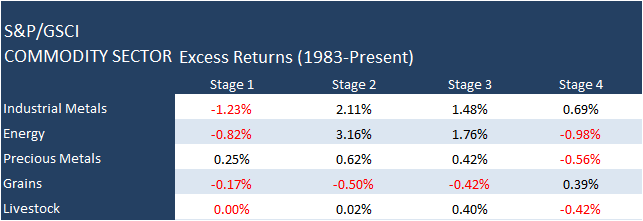
The logic is the same as that applied to our other cycle-related modelling: in the more expansive stages of the cycle (e.g. Stage 3), when activity is “strengthening”, we would expect capital intensive commodities such as energy and metals to perform relatively better than other commodities.
In the more defensive phases of the cycle, when money supply momentum is falling, demand for more “defensive” or “basic” commodities such as food and grains should be expected to be relatively stronger.
The table below illustrates the historical performance of the major commodity classes in each Stage of the global boom-bust cycle, and this seems to validate the economic logic above.
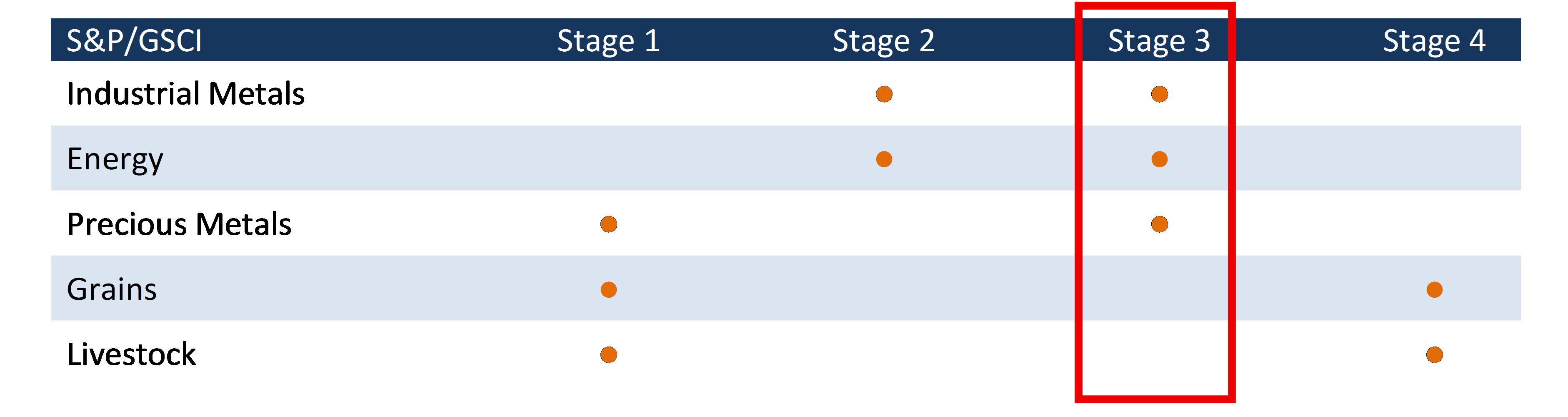
For the upcoming month our global business cycle proxy remains in the late-expansion Stage 3 of the cycle, with a preference (see below) for more “pro-cyclical” commodities such as industrial metals, energy and precious metals over grains and livestock. Stage 3 remains in place until early in 2027.
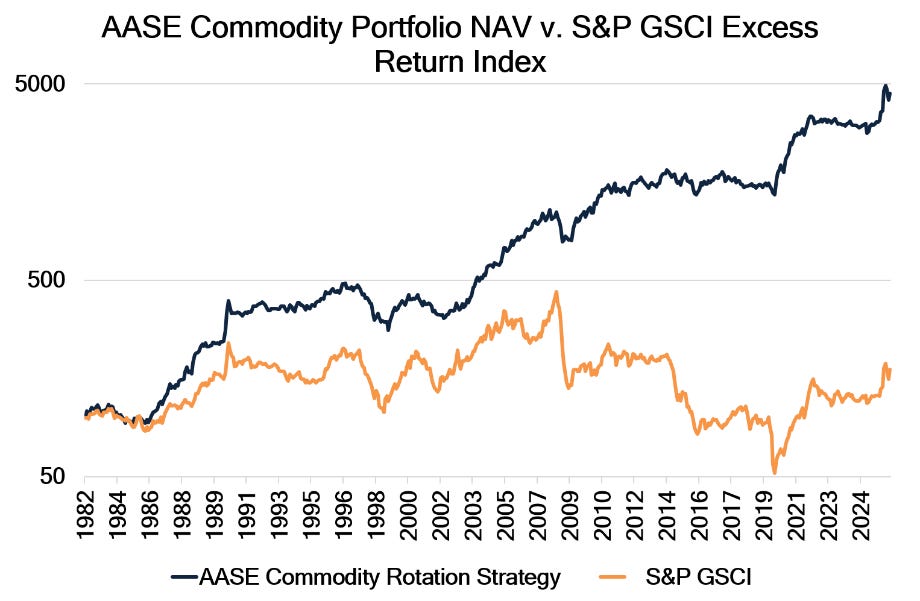
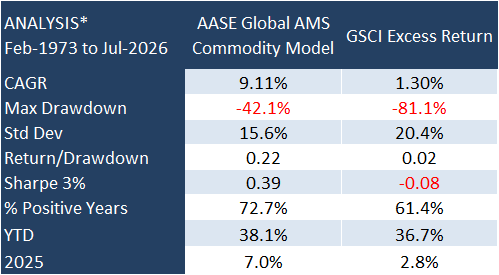
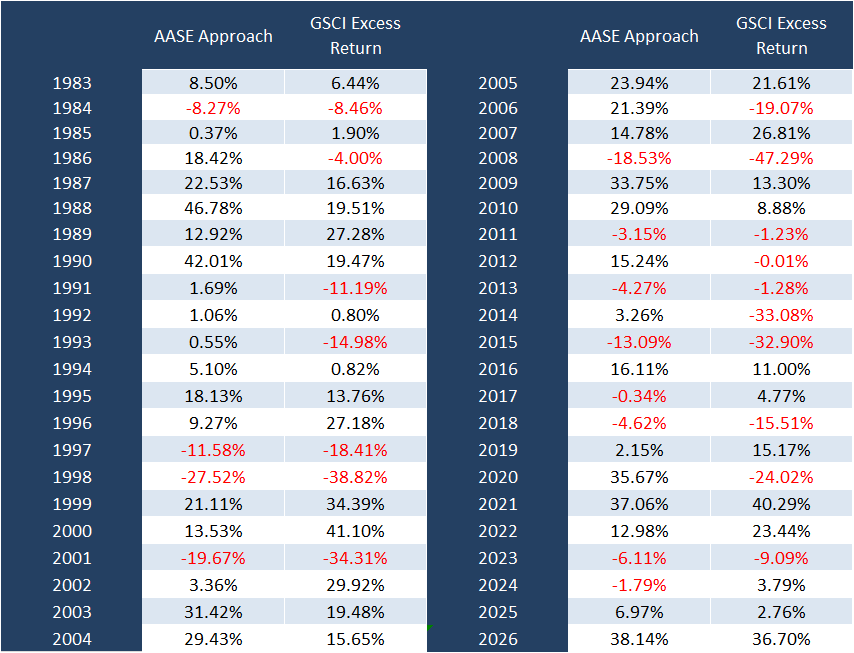
Using our staging model our notional commodity portfolio has tended to outperform the general commodities asset class as measured by the GSCI. This year has continued this trend.
Here are the results of the model portfolio on a yearly basis:
Graphically the notional performance looks as follows:
Individual Commodities
Below we present the outlook for various commodities that are included in Stage 3 allocations.
